Your Blood Holds The Answer To How Well You Age
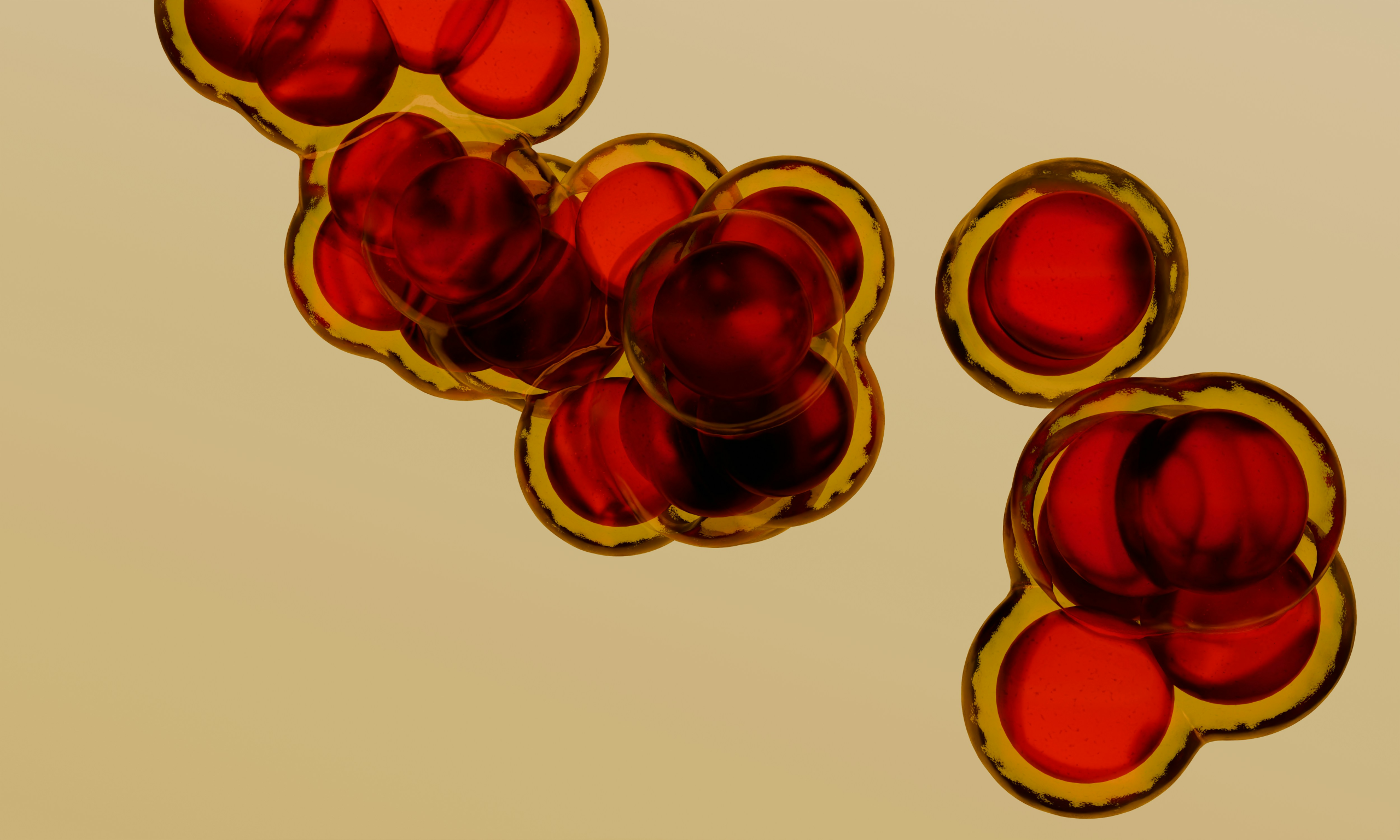
The science of oxygen delivery and what it reveals about your cellular longevity
There is one process that quietly governs how well you age, how clearly you think, how swiftly you recover — and it begins not with a supplement or a protocol, but with a single question: is your oxygen actually reaching your cells?
Oxygen is often spoken of as though breathing is the only variable that matters. In clinical practice, we know otherwise. The journey from breath to cell is a multi-step, elegantly coordinated system — and when any part of it falters, the effects ripple outward in ways that are often misattributed to stress, age, or simply “getting older.”
At Regenerative Health, this is precisely where we begin: not with symptoms, but with the system beneath them.
What happens when oxygen delivery fails quietly
The most significant health challenges rarely announce themselves dramatically. Instead, they manifest as a gradual dimming — energy that fluctuates without explanation, recovery that takes just a little longer than it used to, a mental sharpness that feels somehow less reliable than before.
These are the signatures of compromised oxygen delivery. When this process is inefficient, the consequences reach every system in the body:
Energy production becomes sluggish — the mitochondria cannot generate ATP at full capacity.
Recovery from exercise, illness, or stress slows considerably.
Cognitive clarity and focus become harder to sustain.
Circulation grows less adaptive and responsive to the body’s changing demands.
From a regenerative perspective, this is not simply ageing — it is a system under strain, and one worth looking at more closely.
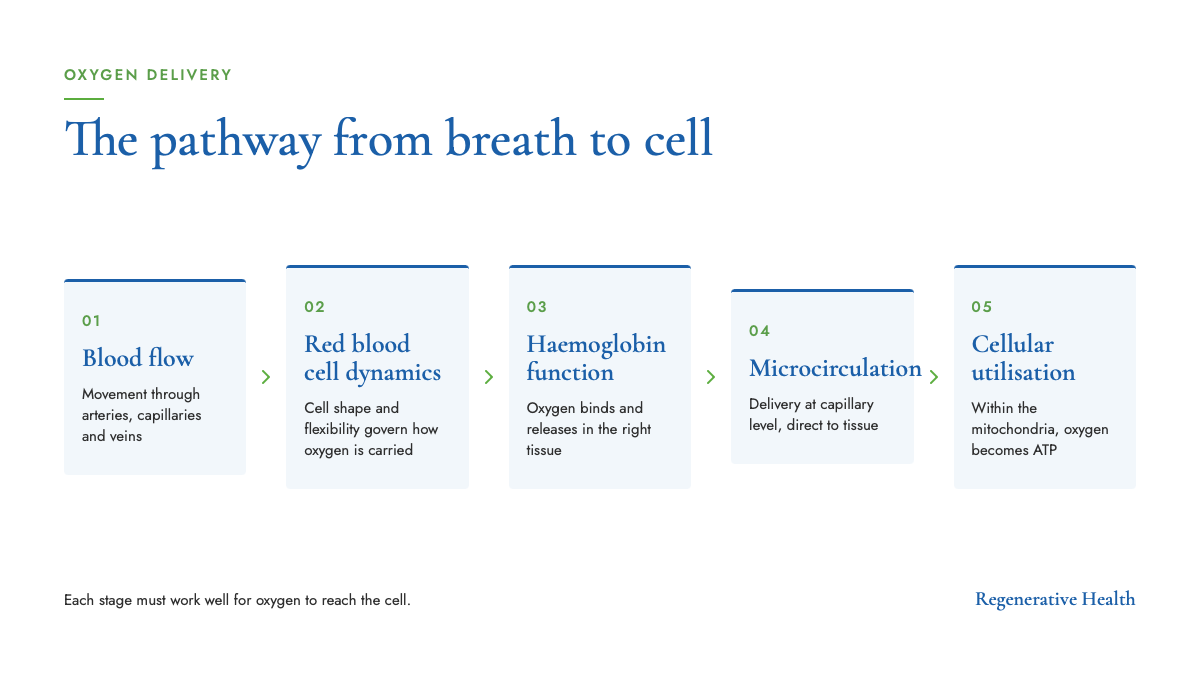
The pathway from breath to cell
Oxygen delivery is not a single event. It is a cascade — and each stage must function with precision for the whole to work.
“In many cases, oxygen is not absent — it is simply not arriving where it is needed. This distinction is everything.”
What we see under the microscope
Live blood analysis offers a different kind of view — rather than numbers on a report, we observe living blood under the microscope. We can see how your red blood cells are behaving in real time — their shape, flexibility, tendency to cluster, and their relationship to the plasma they move through.
What we frequently observe in individuals experiencing fatigue, poor recovery, or cognitive fog:
Red blood cells that have lost their ideal disc shape, reducing oxygen-carrying surface area.
Rouleaux formation — cells stacking like coins, impeding free movement through capillaries.
Sluggish plasma with signs of protein aggregation, which in Naturopathic practice we associate with oxidative burden.
These observations are not a diagnosis. In Naturopathic practice, we read them as signs of a system under strain — and a starting point for supporting it.
The hidden guardian of your capillaries
One of the most underappreciated structures in human physiology is the glycocalyx — the delicate gel-like layer that lines the inside of every blood vessel wall. It is the interface between your blood and your vascular tissue, and its integrity is central to efficient oxygen delivery.
When healthy, the glycocalyx regulates blood flow through capillaries, supports nitric oxide signalling that allows vessels to dilate appropriately, and acts as the primary protector of microcirculation.
When compromised — by oxidative stress, chronic inflammation, or mineral imbalance — blood flow becomes less efficient. Oxygen delivery fails at tissue level, even when haemoglobin saturation appears normal on a standard reading. This is why we look beyond a single reading.
Restoring the system, not masking the symptom
At Regenerative Health, the goal is never simply to increase oxygen — it is to restore the integrity of every stage through which oxygen travels. This requires addressing the foundational variables that govern circulation and cellular function.
Cellular energy: adequate ATP production is required for circulation, vessel tone, and oxygen utilisation — energy must come first.
Mineral balance: magnesium, sodium, and potassium regulate vascular tone and blood flow — deficiency is rarely considered but frequently implicated.
Blood quality: red blood cell flexibility, plasma viscosity, and flow dynamics, observable directly through live blood analysis.
Redox balance: reducing oxidative stress to protect the pathways through which oxygen is utilised at a cellular level.
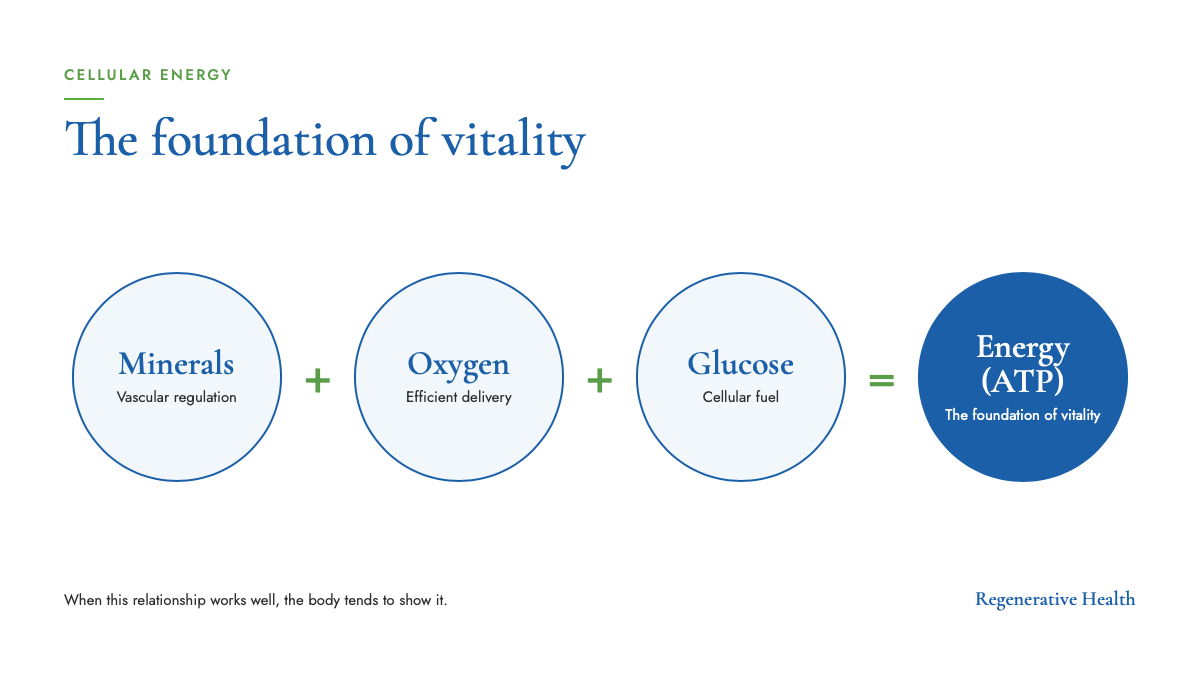
When this relationship is functioning well, the body tends to show it — steadier energy, better recovery, clearer thinking, and greater resilience to stress.
What becomes possible when oxygen delivery is supported
The body is not simply a collection of parts to be managed — it is a dynamic, self-regulating system that, when given the right conditions, tends towards resilience. When clients work on oxygen delivery and microcirculation, they often describe changes such as:
Energy levels that feel more consistent and reliable.
Improved physical and cognitive recovery.
Sharper mental clarity, and a lifting of brain fog.
Greater resilience under stress — physiological and psychological.
This is the work of regenerative health: not the suppression of symptoms, but support for function at its most fundamental level. By understanding where the oxygen delivery chain is under strain — and supporting it at the root — we give the body what it has always needed to thrive.
Curious what your blood reveals?
Book a live blood analysis consultation to see your own blood under the microscope and talk through what we observe together.